- info@integrindt.com
- (+91) 96860 17690

High-sensitivity detection of surface and immediate subsurface discontinuities in ferromagnetic materials.
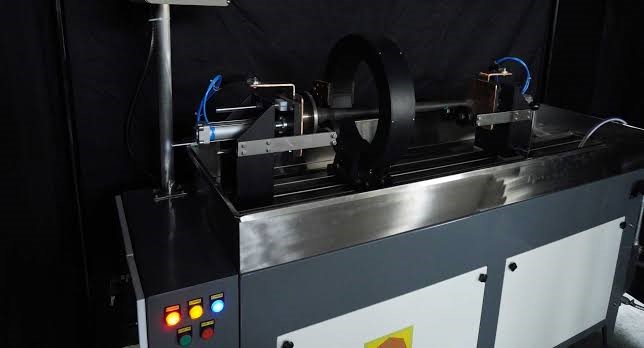
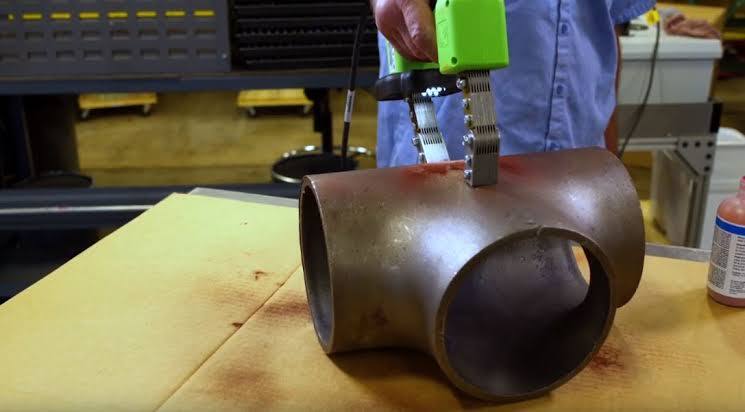
Magnetic Particle Testing (MPT), also known as Magnetic Particle Inspection (MPI), is a non-destructive testing technique used to locate surface and near-surface discontinuities in ferromagnetic materials (such as carbon steel, low-alloy steel, cast iron, and magnetic alloys).
The process involves magnetizing the component using an AC or DC electromagnetic yoke or bench unit. If a surface-breaking flaw or shallow subsurface crack is oriented transverse to the magnetic flux lines, a magnetic leakage field (north and south pole gap) forms at the flaw site. Finely divided iron particles applied to the surface in dry powder or wet suspension form are drawn into the leakage field, producing sharp visual indication lines.
| Method Code: | MPT / MPI |
|---|---|
| Detection Type: | Surface & Near-Surface |
| Materials: | Ferromagnetic Materials |
| Primary Codes: | ASME V, Article 7; ASTM E1444/E1444M |
Operational parameters, equipment capabilities, and governing codes for Ultrasonic Examination.
| Specification Category | Technical Parameter & Scope |
|---|---|
| Discontinuity Types Detected | Surface and near-surface cracks, fatigue cracks, toe cracks, heat-treatment cracks, grinding cracks, seams, laps, and other linear discontinuities. |
| Material Compatibility | Applicable only to ferromagnetic materials, including carbon steel, low-alloy steel, cast iron, and other suitable ferromagnetic alloys. Not applicable to austenitic stainless steel, aluminum, copper, or titanium. |
| Applicable Codes & Standards | ASME Boiler & Pressure Vessel Code Section V, Article 7, ASTM E1444/E1444M, ASTM E709, AWS D1.1, ISO 17638, and ISO 9934. |
| Magnetization Equipment | AC/DC electromagnetic yokes, articulated-leg yokes, prod units, and magnetic bench equipment with suitable magnetizing capacity for the component under examination. |
| Particle Medium Options | Dry magnetic particles in visible colors, wet visible magnetic particle suspensions with contrasting background paint, and wet fluorescent magnetic particles under UV-A illumination. |
| Demagnetization & Cleaning | Post-examination demagnetization using an AC magnetic field, with residual magnetism controlled to specified limits, followed by surface cleaning prior to coating, heat treatment, or further processing. |
Discuss your material, thickness, and code requirements with our certified inspection team.
INTEGRI NDT provides Non-Destructive Testing (NDT) and dimensional inspection services for components, welds, fabricated structures, Machined components inspection, Forging inspection, Casting inspection and applicable industrial requirements.